
Criminal Court Records in Tishomingo County
A criminal court record is the case file that opens the moment formal charges reach the court. The clerk builds and holds this file. It gathers every paper tied to one defendant and one set of charges: the charging document, the arraignment notice, motions, plea forms, hearing orders, the verdict or plea, and the final judgment. In Tishomingo County the Circuit Clerk, Rebecca Oaks, serves as Clerk of the County and Circuit Courts and keeps felony and other circuit criminal files in Room 204 of the courthouse in Iuka. Justice Court and the city courts keep their own criminal files for the cases they hear.
Two main levels handle criminal matters here. Circuit Court is the trial court for felonies, and it is the venue once a grand jury returns an indictment. Justice Court handles misdemeanors, traffic offenses, and the early steps of many cases, such as the initial appearance and bond. Municipal courts in Iuka, Belmont, Paden, and the other towns hear city ordinance and misdemeanor cases. The record for a case sits with the court that heard it, so the felony file and the misdemeanor file rarely live in the same place.
Who Prosecutes Tishomingo County Criminal Cases
The State brings criminal charges, not a private party. Felony cases are prosecuted by the District Attorney for the First Circuit Court District. Jason D. Herring has held that post since October 14, 2024, after the Governor appointed him to the seat. The First Circuit covers Tishomingo plus Alcorn, Itawamba, Lee, Monroe, Pontotoc, and Prentiss Counties, with offices in Tupelo and Corinth. The DA reviews the evidence, presents felony cases to the grand jury, and files the charges that drive the Circuit Court case file.
Lower-level local cases run a different track. The county Prosecuting Attorney, Nathaniel Clark, works with Justice Court and the local prosecution channel rather than the felony office in Tupelo. Whichever office files the charge, the record of that charge ends up with the court that handles the case.
How to Search Tishomingo County Criminal Court Records
Tishomingo County criminal court records are reached through more than one channel. The main online tool for trial-court files is Mississippi Electronic Courts, known as MEC and its public side PAMEC. It serves Circuit, Chancery, and County court files across the state, but access is login-gated, so you register first. When a case is not online, the Circuit Clerk counter in Iuka is the direct route to court records across the county.
- Open the MEC or PAMEC portal and register for a public access account.
- Search by defendant name or by case number.
- Narrow the results by court, case type, and filing date to find the right file.
- Open the case to read the docket, the charges, and the disposition.
- Request a certified copy from the Circuit Clerk when you need an official record.
Login-gated document viewing may carry a fee. For a record that is not posted, a request to the clerk who holds the file fills the gap. Federal charges follow a separate path through the courts and PACER, covered further down the page.
Stages of a Tishomingo County Criminal Case
A criminal case moves through the court in set stages, and each step leaves a mark in the record. The file grows as the case advances, so an open case and a closed case look very different on the docket. The flow below shows the path most cases follow from the first charge to the sentence.
Case flow: Charges Filed › Arraignment › Pretrial / Motions › Plea or Trial › Disposition › Sentencing
| Stage | What Happens |
|---|---|
| Arraignment | The defendant appears, the charges are read, and a first plea is entered. Bond conditions may be set or reviewed here. |
| Pretrial / Motions | Lawyers file motions, exchange evidence, and argue what the jury can hear. Hearings and continuances are logged on the docket. |
| Plea or Trial | The case ends in a plea or goes to trial. A guilty plea or a verdict settles each charge. |
| Sentencing | After a conviction, the judge imposes the sentence, which may include jail or prison time, probation, fines, and restitution. |
Note: An arrest can begin in Justice or Municipal Court for bond, while the felony charge moves to Circuit Court only after a grand jury indictment.
What a Tishomingo County Criminal Court Record Shows
A criminal case file is built from fields that repeat from case to case. The portal or the paper file lays out the same core data, which makes a record easy to read once you know the labels. The table lists the main fields and what each one tells you about the case.
| Field | What It Shows |
|---|---|
| Case Number | The unique number the court system assigns to the case, used to pull the full file. |
| Defendant | The person charged, listed as the party the State has accused. |
| Charges | Each count as filed, with the offense name and whether it is a felony or misdemeanor. |
| Plea | The defendant's answer to each charge, such as guilty, not guilty, or no contest. |
| Disposition | The final outcome of each count, such as guilty, dismissed, or acquitted. |
| Sentence | The punishment imposed after a conviction, including any suspended or probation terms. |
Most files also carry docket entries, hearing dates, the judge, the attorneys of record, and any bond or warrant orders. Document links to pleadings and judgments may sit behind a login. Sensitive details, such as Social Security numbers and minor names, are redacted before a file is shown.
Charges vs. Convictions
Being charged is not the same as being convicted, and a criminal court record keeps the two apart. A charge is an accusation. A conviction is a finding of guilt by plea or by verdict. A file can list a charge that was later dropped, dismissed, or that ended in a not-guilty result, and that charge still shows in the record even though it never became a conviction. For a closer look at the charging documents and how a charge can change, the Tishomingo County arrest records and court charges page goes deeper.
| Charge | Conviction | |
|---|---|---|
| Stage | Accusation | Verdict or plea |
| Burden of Proof | Probable cause | Beyond reasonable doubt |
| Public Record | Yes | Yes |
Reading Dispositions and Sentences
The disposition is the final outcome of a charge, and the sentence is the punishment that follows a conviction. One case file can hold several dispositions when a defendant faces more than one count. Reading them takes a little fluency in court shorthand.
- Guilty: the defendant pleaded guilty or was found guilty by the court or a jury.
- Not guilty: a trial ended in acquittal on that count.
- Dismissed: the court dropped the charge before a finding of guilt.
- Nolle prosequi: the prosecutor chose not to pursue the charge.
- Nolo contendere: a no-contest plea, treated as a conviction for sentencing.
- Deferred or diversion: judgment held back while the defendant meets set conditions.
A sentence may list jail or prison time, probation, fines, court costs, and restitution. The record shows the term imposed and any part of it the judge suspended. Probation means supervision in place of, or after, time in custody.
Sealed vs. Expunged Records
Some criminal records leave public view, but sealing and expunction are not the same thing. Sealing hides a record from general public access while the file still exists in the court system. Expunction goes further. Under Mississippi Code Section 99-19-71, eligible records can be removed from ordinary public access, and the law lets a person treat the matter as if it never happened for most purposes. Eligibility is narrow. It turns on the offense type, the disposition, any waiting period, and prior record, so not every case qualifies.
| Sealed | Expunged | |
|---|---|---|
| Visibility | Hidden from public | Removed and treated as never existed |
| Law Enforcement | Limited access | Very limited |
| Eligibility | Youth court files or records closed by court order | Dismissed, not-guilty, and certain misdemeanors or first offenses under § 99-19-71 |
A petition to expunge is filed in the court that handled the case, whether that was Municipal, Justice, County, or Circuit Court. Note: Eligibility is never automatic, and a court order is required before any custodian removes a record from public access.
Public Access to Criminal Court Records
Mississippi treats most court files as open to the public. The Mississippi Public Records Act sets the baseline: records are available for inspection unless another law makes them confidential. Criminal case files in Circuit and Justice Court fall under that rule, which is why dockets, charges, pleas, and judgments can be viewed by the public. Confidentiality carve-outs still apply, and the courts redact personal identifiers and seal protected files before release.
Key Statutes:
Miss. Code § 25-61-1 - The Public Records Act keeps public records open for inspection unless another law makes them confidential.
Miss. Code § 99-19-71 - Eligible dismissed, dropped, not-guilty, and certain conviction records may be expunged by petition.
Federal placement of the county is fixed by statute too, which decides where a federal criminal case is heard. That assignment is set out in 28 U.S.C. Section 104, which puts Tishomingo County in the Northern District of Mississippi.
The federal code spells out which district and division covers the county.
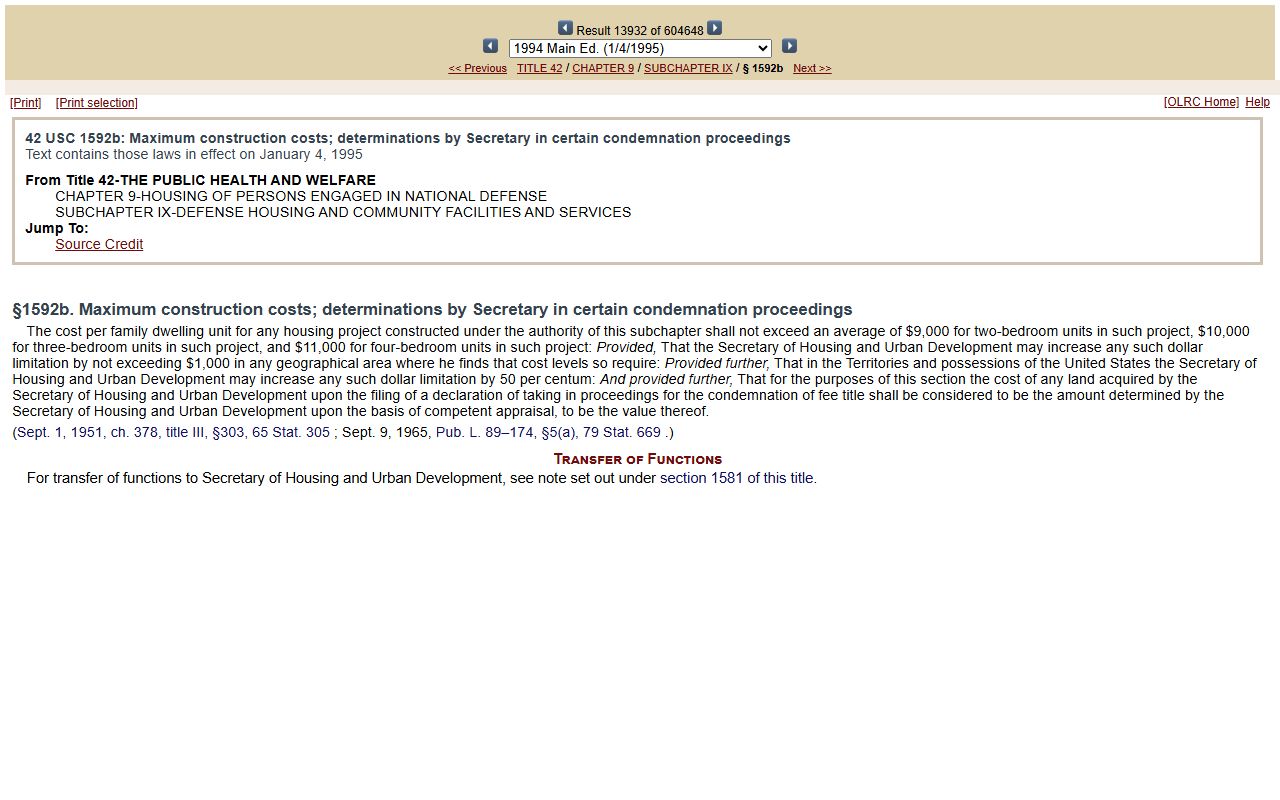
That statute is the reason a federal criminal case from the county is heard in the Northern District rather than a state circuit court.
Federal Criminal Cases for Tishomingo County
Not every criminal case from the county is a state case. Federal crimes are prosecuted in the U.S. District Court for the Northern District of Mississippi, and the county sits in that court's Aberdeen Division. Federal charges cover offenses such as drug trafficking across state lines, firearms crimes, and large-scale fraud. These files never appear in the Circuit Clerk's records.
The federal cases are brought by the office of the U.S. Attorney for the Northern District of Mississippi, led by Scott Leary.
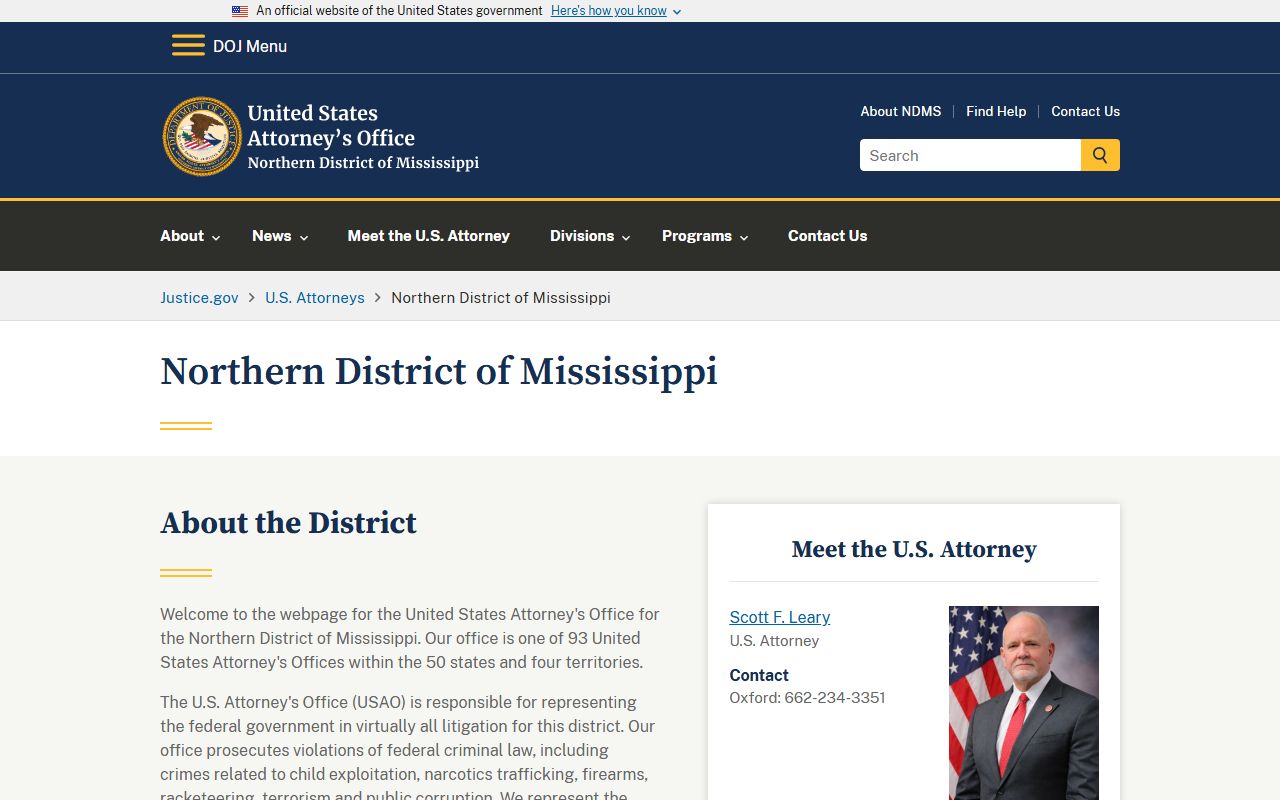
That office handles federal prosecutions and civil suits for the whole district, which includes the seven counties of the First Circuit. News of federal indictments and convictions is posted publicly even when the full case file needs a login to read.
The office shares its case outcomes through an official news feed.
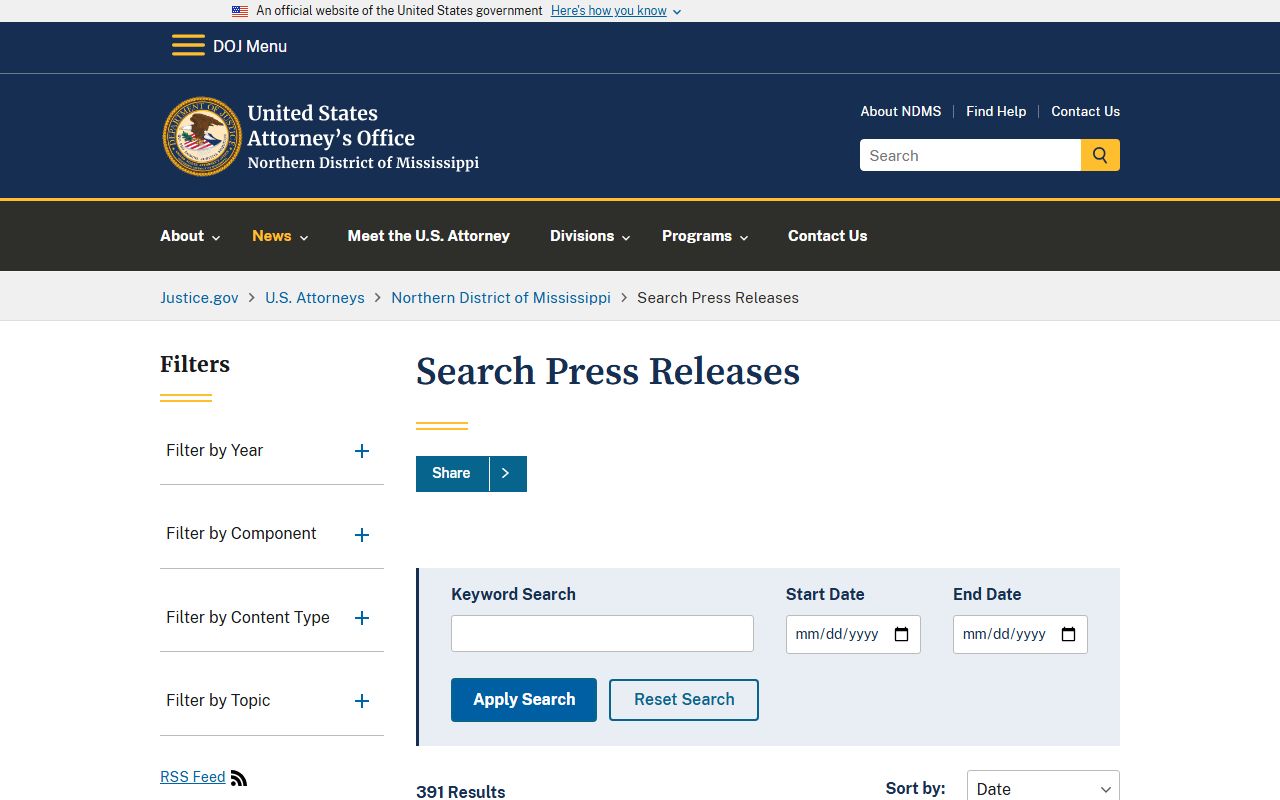
The press release page names the charges and the sentence once a major case closes, though the full docket lives in the federal system. To read that docket, you go to the federal electronic records service.
Federal dockets and filings come from one national system.
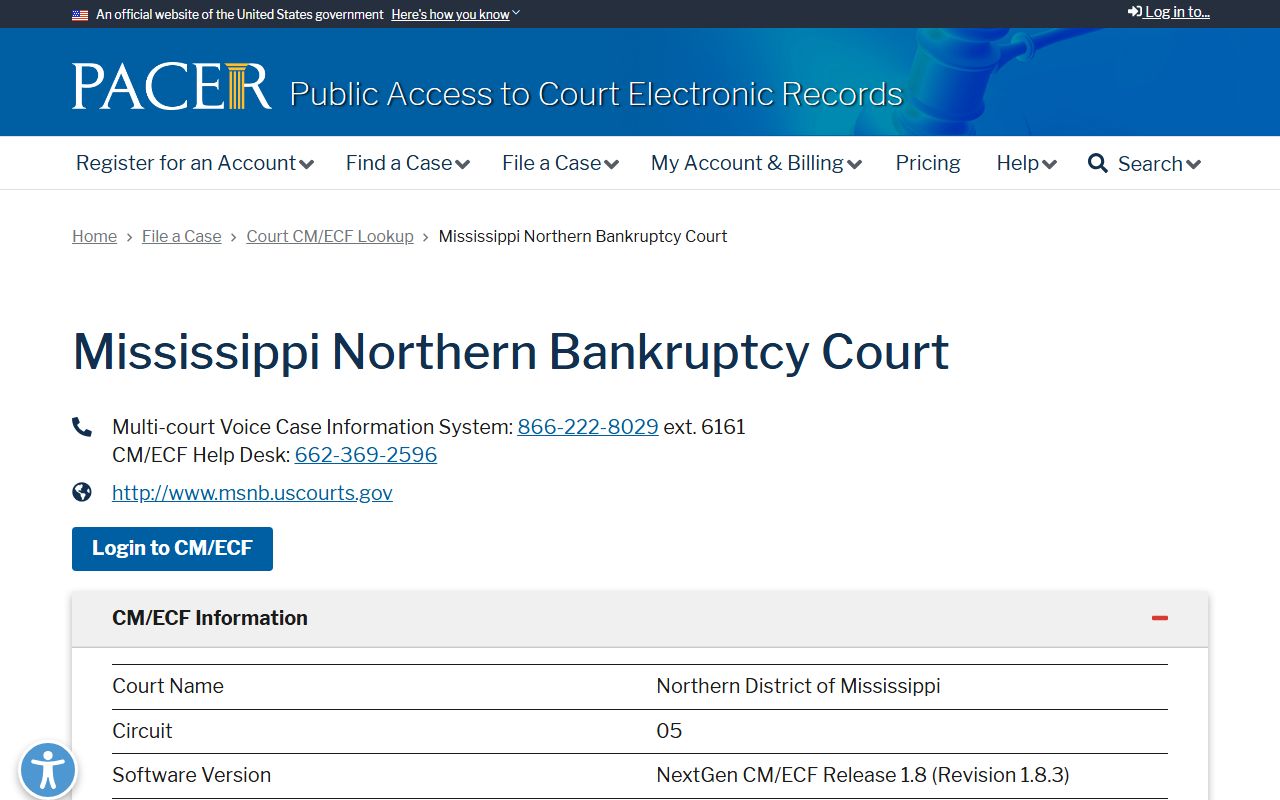
Federal records are searched through PACER and the CM/ECF court lookup, the public access service for federal district, appellate, and bankruptcy courts. PACER charges a small per-page fee, and a free case locator helps point you to the court that holds a case.
Background Check Considerations
People search criminal court records for many reasons, from checking a name to screening a tenant or a worker. A casual lookup and a formal background check are not the same thing. A regulated background check for employment, housing, or credit must follow the federal Fair Credit Reporting Act and use a licensed screening company. A quick name search on a court portal does not meet that standard.
Important: This site is not a consumer reporting agency under the FCRA, and its information may not be used for employment, tenant, credit, or insurance decisions.
Restricted Criminal Court Records in Tishomingo County
Some criminal matters stay out of public view by law. The court withholds or redacts these files even though most criminal records are open. The categories below are the ones most often closed to a public search.
- Youth court and juvenile cases, which are confidential except to authorized parties.
- Sealed cases closed by statute or by court order.
- Expunged records removed from public access under § 99-19-71.
- Adoption and certain domestic files tied to a criminal matter.
- Mental commitment proceedings that hold sensitive medical detail.
- Personal identifiers such as Social Security and account numbers, which are redacted.
When a file is restricted, the clerk can confirm only that access is limited. Getting more usually takes a court order or proof that you are an authorized party, such as the defendant, a parent, or an attorney of record. Note: Ongoing cases may also have sealed filings that open to the public once the matter is resolved.