
What Probate Covers in Tishomingo County
In Mississippi, probate is the work of the Chancery Court, not a stand-alone probate court. Tishomingo County follows that rule. The Chancery Court handles estates, wills, guardianships, conservatorships, minor settlements, and mental health commitments. It is the same court that hears divorce, child custody, adoption, and land disputes. Because it is a court of equity, it deals with fairness and the care of people and property rather than crimes or jury trials.
The Chancery Clerk is the record keeper for all of these cases. In Tishomingo County that clerk is Peyton Cummings, whose office sits inside the courthouse at 1008 Battleground Drive in Iuka. When a family opens an estate or asks the court to name a guardian, the petition is filed here. The clerk dockets the case, stores the will, and tracks every order the chancellor signs. Day-to-day probate questions go to this office, not to the Circuit Clerk down the hall.
Estates are the most common reason people look up probate files. A guardianship or a will contest can also bring a family to the same counter.
Tishomingo County Probate Terms Defined
Probate files use words that rarely come up anywhere else. A short glossary helps when reading a petition or an order from the Tishomingo County Chancery Court.
- Testator
- The person who made the will. A testator names who should receive property and who should carry out those wishes.
- Executor
- The person named in the will to settle the estate. The court confirms this role with letters testamentary.
- Intestate
- Dying without a valid will. State law then sets who inherits, and the court appoints an administrator instead of an executor.
- Guardianship
- A court order placing the care of a minor, or that child's property, in the hands of a trusted adult.
- Conservatorship
- A court order giving someone authority over the affairs of an adult who can no longer manage alone.
- Muniment of Title
- A short form of probate that admits a will only to clear title to property, with no full estate administration.
How to Search Tishomingo County Probate Records
There is no single county website that lists every probate case. Access runs through a few channels, and the right one depends on what you need. Electronic case files sit in the statewide court system. Older files, sealed matters, and certified copies come from the Chancery Clerk in person, by phone, or by mail.
- For online docket and document access, open Mississippi Electronic Courts and register a free account through PAMEC, the public access system. Chancery, Circuit, and County courts file their trial records there.
- Log in and search by party name or case number. You can view dockets and download documents in courts that have gone electronic, though some viewing is gated behind the account.
- If a file is older, restricted, or simply not online, call the Chancery Clerk at (662) 423-7010 or visit the office in Iuka. Staff can pull the case and quote current copy fees.
- For deeds, liens, and other property tied to an estate, use the county's Chancery land-record portal, which is covered further down this page.
PAMEC is a login environment, so creating that account is the first step for any online viewing. When a record is not available electronically, the counter at 1008 Battleground Drive is the reliable fallback. The First Chancery Court District also posts files and resources that help filers prepare estate and guardianship paperwork before they reach the clerk.
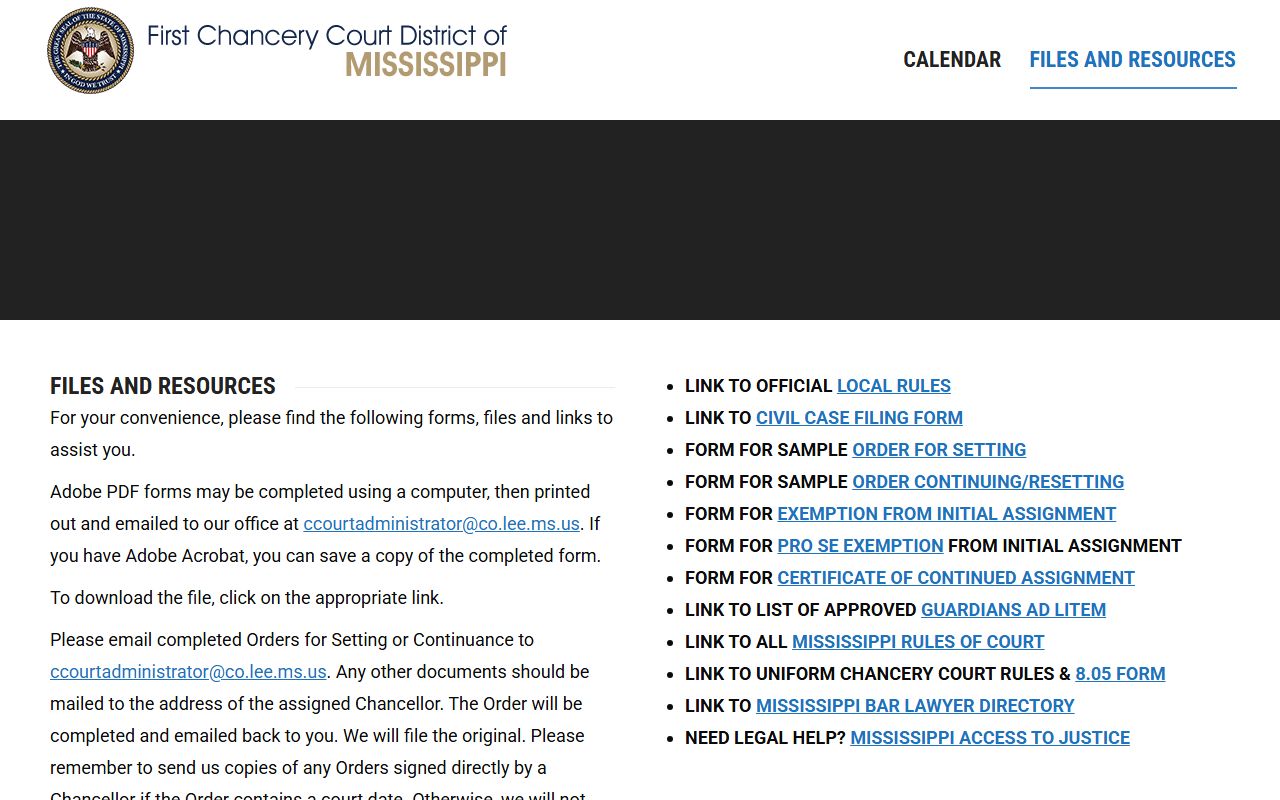
The district page gathers forms, contact details, and instructions that apply across all eight counties it serves, so it is a useful companion to the local Tishomingo County clerk's office.
Where Tishomingo County Probate Cases Are Filed
Tishomingo County belongs to Mississippi's First Chancery Court District. Four chancellors share the district docket: Jacqueline Mask, Michael Malski, Stephen T. Bailey, and Bradley D. Tennison. A court administrator manages their calendars across the district. The First Chancery Court District publishes district information online, including the judges who hear cases and the staff who handle scheduling.
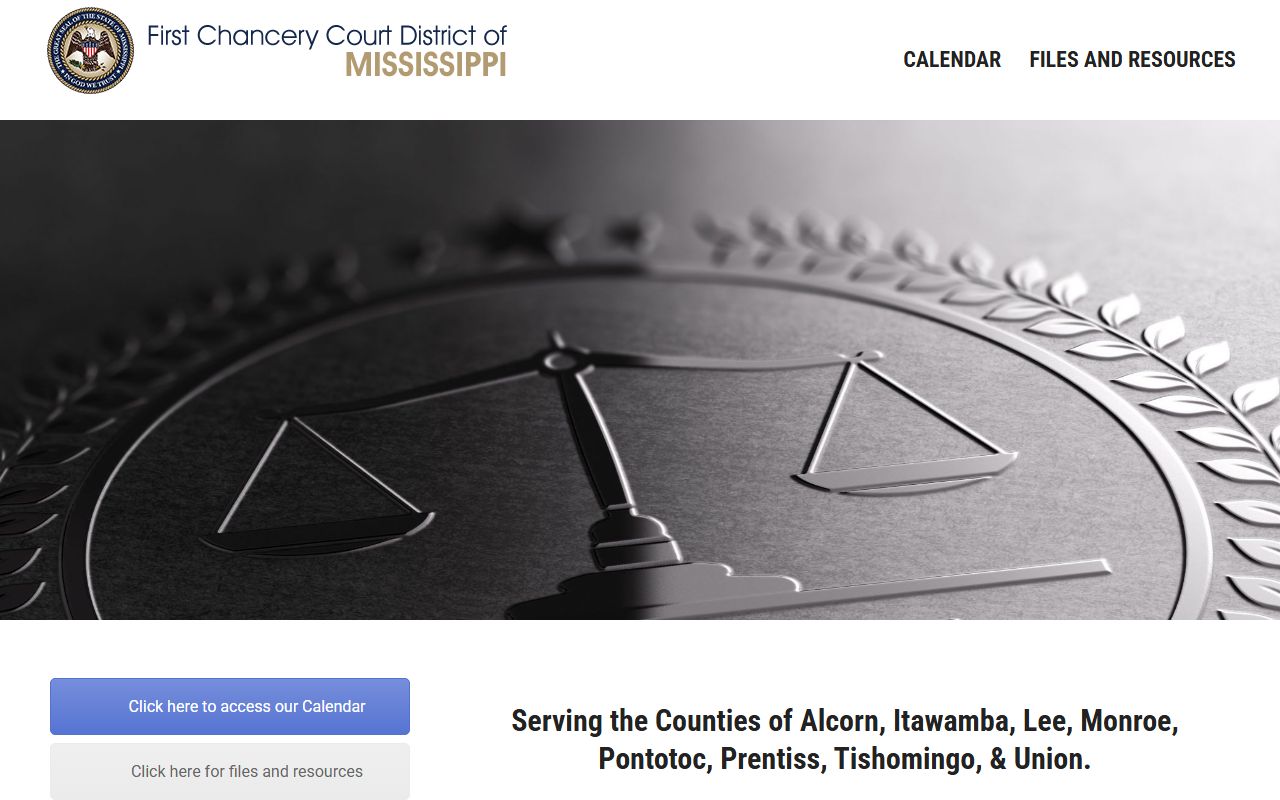
The district covers eight counties, so a Tishomingo County estate may be set before any of its four chancellors. The filing itself, though, always starts at the local Chancery Clerk's office in Iuka.
Tishomingo County Chancery Clerk
Peyton Cummings, Chancery Clerk
1008 Battleground Drive
Iuka, MS 38852
(662) 423-7010
Fax (662) 423-7005
Mon-Fri 8am-5pm
First Chancery Court District
Court Administrator Beth Burnett McNutt
P.O. Box 7395
Tupelo, MS 38802
(662) 432-2130
Chancellors: Mask, Malski, Bailey, Tennison
Note: The Chancery Clerk also serves as clerk of the Board of Supervisors and as the county's public recorder, so the same office holds estates and land records alike.
Tishomingo County Probate Filing Fees
Each type of probate case carries a set filing fee, listed on the county Courts page. The amounts below cover the most common estate and protective filings. Copy fees, service costs, and publication notices are charged on top of the filing fee.
| Filing type | Total |
|---|---|
| Estate - Testate or Intestate | $158.00 |
| Estate - Muniment of Title Only | $148.00 |
| Guardianship | $158.00 |
| Conservatorship | $158.00 |
| Minor's Settlement (Any Amount) | $158.00 |
| Will Contest | $158.00 |
| Name Change | $148.00 |
| Mental Commitment | $148.00 |
Chancery filing and recording costs are set by state law under Miss. Code § 25-7-9, so the county table reflects those statutory pieces. Certified copies and online purchases carry their own charges. The clerk can confirm current copy rates before you file.
The Small Estate Affidavit
Not every estate needs full probate. Mississippi law offers a faster route for small estates, which can save a family weeks of court work and added fees. The rule lives in Miss. Code § 91-7-322.
Small estate shortcut: When the probate estate is worth $75,000 or less and at least 30 days have passed since the death, a successor may collect and distribute property using a sworn affidavit instead of opening a full estate.
The affidavit route only works when each statutory condition is met. The main ones are below.
- The probate estate, after liens and encumbrances, is worth $75,000 or less.
- At least 30 days have passed since the person's death.
- No petition for a personal representative is pending, and none has been appointed.
- The affidavit states the successor's relationship and how the property should be distributed.
When these facts do not line up, the family files a regular estate instead. The Chancery Clerk can point to the right form, but the office cannot give legal advice.
Wills and Muniment of Title
A will is the heart of most estate files. Once the maker dies, the will is brought to the Chancery Court and offered for probate. The court reviews it, admits it, and issues letters that let the executor act. From that point the will is part of the public case file unless a judge seals it.
Some estates need far less. When the only goal is to clear the title to land or a home, the family can ask the court to admit the will as a muniment of title. This short form skips full administration. It costs less to file and moves faster, which is why it is common when the main asset is real property and there are few debts.
If there is no will at all, the estate is intestate. State law then decides who inherits, and the court names an administrator to do the work an executor would have done.
Guardianship and Conservatorship Records
Chancery Court does more than settle estates. It also protects people who cannot fully protect themselves. A guardianship covers a minor or that child's money. A conservatorship covers an adult who can no longer handle daily affairs because of age, injury, or illness.
Both cases produce a paper trail. The court reviews who should serve, may require a bond, and orders regular reports on how the money is managed. Inventories and accountings are filed so the chancellor can confirm the funds are spent for the right person. Because these files involve children and vulnerable adults, public access is often limited.
What Tishomingo County Probate Files Show
No public sample estate file was open for viewing without an MEC login, so the exact layout varies by case. Still, a Tishomingo County probate file may include a fairly standard set of documents once an estate is opened.
- The petition or application for probate or administration.
- The will and the order admitting it.
- Letters testamentary or letters of administration.
- The oath, bond, and notice to creditors.
- An inventory and appraisal of estate property.
- Claims against the estate and orders to sell or distribute property.
- Annual or final accountings and the closing decree.
Guardianship and conservatorship files follow a similar shape, with inventories and reports tracking the protected person's funds. The clerk's docket ties every document to a single case number.
Restricted Tishomingo County Probate Records
Open access is the general rule under the Mississippi Public Records Act, found at Miss. Code § 25-61-1. Probate is an area where that rule meets real limits, because many of these files touch children, health, and private money.
Guardianship and minor settlement records often carry restrictions to shield the child involved. Mental commitment files contain sensitive medical detail and may be sealed or redacted. Adoption files run through the same Chancery Court but are not treated as open public records. A judge can also seal an estate file for cause. When a record is closed, the requester usually needs to be a party, an attorney, or hold a court order.
Note: Personal identifiers such as Social Security numbers and account numbers are redacted from probate files, so a public copy may show less than the full original.
Probate and Land Records in Tishomingo County
Estates and real property go hand in hand. When someone dies owning land, the deed, any mortgage, and related liens all matter to the estate. The Chancery Clerk is the county's public recorder, so those property documents live in the same office as the probate files.
The county offers an online index to land records through the DuProcess portal. It is a search index, not the official record, and only the index inside the courthouse is treated as official. A non-refundable service fee of 3.5 percent, with a two-dollar minimum, applies to online copy purchases. The portal is the quickest way to spot deeds, mortgages, and lis pendens notices tied to an estate, even though it does not run a full probate-case search.
Marriage and divorce filings sit close to probate in everyday life, and many estate questions begin with a spouse's records. Those are covered on the county marriage and divorce records page, while the office that issues copies and handles court filings is profiled on the Circuit Clerk page.